

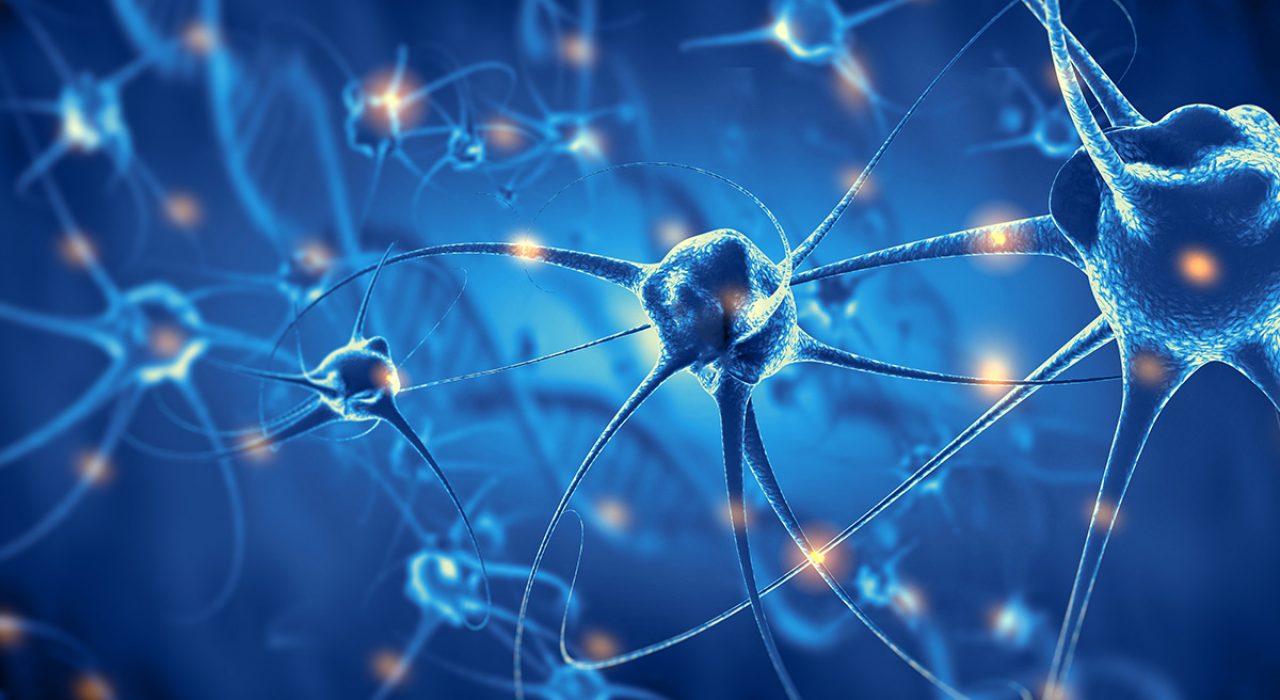
Researchers at UT San Antonio have uncovered new details about electrical signals happening within nerve cells, deepening scientists’ understanding of the brain.
The UT San Antonio research team and international collaborators investigating the electrical activity inside neurons are led by Marcelo Marucho, professor of physics and astronomy and member of the department’s Biophysics Group, and Md Mohsin, a doctoral student pursuing his PhD in Physics.
“Understanding how electrical processes work could be crucial for linking the behavior of the cell’s skeleton to the activity of neurons,” Marucho said.
While scientists have made significant progress in understanding how nerve cells transmit signals across their outer membranes, Marucho’s team is focused on what happens inside the cell, within the cytoskeleton. The cytoskeleton is a network of structures located within a cell’s cytoplasm that is composed of actin filaments and microtubules.
Previous research has underestimated the role of these structures in neuronal signaling. But Marucho’s research suggests that microtubules could act as miniature electrical wires, facilitating long-distance signal transmission.
“Instead of relying solely on slow diffusion processes, cells may utilize electrical signals along these cytoskeletal structures to regulate local biochemical reactions and support complex brain functions,” Marucho said.
“In the long run, understanding how electrical dysfunctions in cytoskeletal filaments impact neurons can help develop treatments for some neurodegenerative diseases. Also, understanding the connection between memory, learning, and cytoskeleton communication might lead to therapies that prevent, slow, or reverse memory loss and improve neuroplasticity—the brain’s ability to adapt throughout life,” he added.
Hub for biophysics and neuroscience
Using advanced research models, the scientists have discovered the molecular mechanisms that generate electrical oscillations at about 39 hertz in microtubules, a frequency similar to that observed during brain activity. When electrically stimulated, these structures may transfer energy between their internal and external surfaces through tiny openings (nanopores), potentially improving neural communication efficiency and duration.
“Imagine your body and brain is a modern, high-tech car — nature provided it and we’ve learned how to drive and operate it,” Marucho said. “However, over time, you notice the car’s performance is slowing down and commands start to malfunction. You want to know how to keep your car ‘healthy’ for many years and you may want to make modifications to enhance its performance.”
“Once we better understand how each neuron works, we can learn how to maintain, improve and repair them, just as we do with our vehicles,” he added.
The team’s discovery builds on the university’s growing reputation as a hub for biophysics and neuroscience research and demonstrates how scientists are bridging the gap between physics and biology to better understand how living systems function and process information.
Their work appears in the study, “Electrical Oscillations in Microtubules,” and was published in Scientific Reports, the third most-cited scientific journal in the world.


