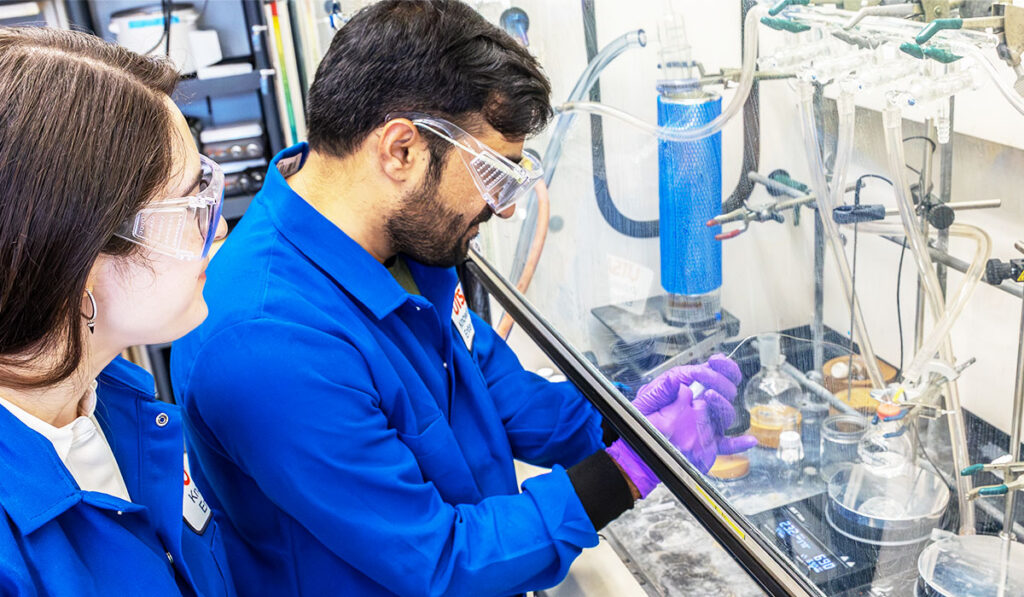
Southwest Research Institute (SwRI) and The University of Texas at San Antonio (UT San Antonio) are teaming up to identify peptide catalysts to accelerate chemical reactions and synthesis of organic molecules — important aspects of pharmaceutical development.
Although the study is not focused on the development of new pharmaceuticals, there’s growing interest surrounding peptides for small-molecule therapeutics and vaccines due to the rise in popularity of GLP-1 drugs. GLP-1 drugs mimic natural peptides to manage diabetes and weight loss. With SwRI-developed Rhodium™, molecular docking and computer-aided drug design software, researchers plan to explore the use of tetrapeptides, which are various strings of four amino acids, often called the building blocks of life.
Strings of amino acids chemically link together to make peptides, while longer strings with 50 or more amino acids generally make proteins. Both peptides and proteins orchestrate important cellular functions within the body. For this project, researchers hope to identify peptide catalysts for medicinal applications.
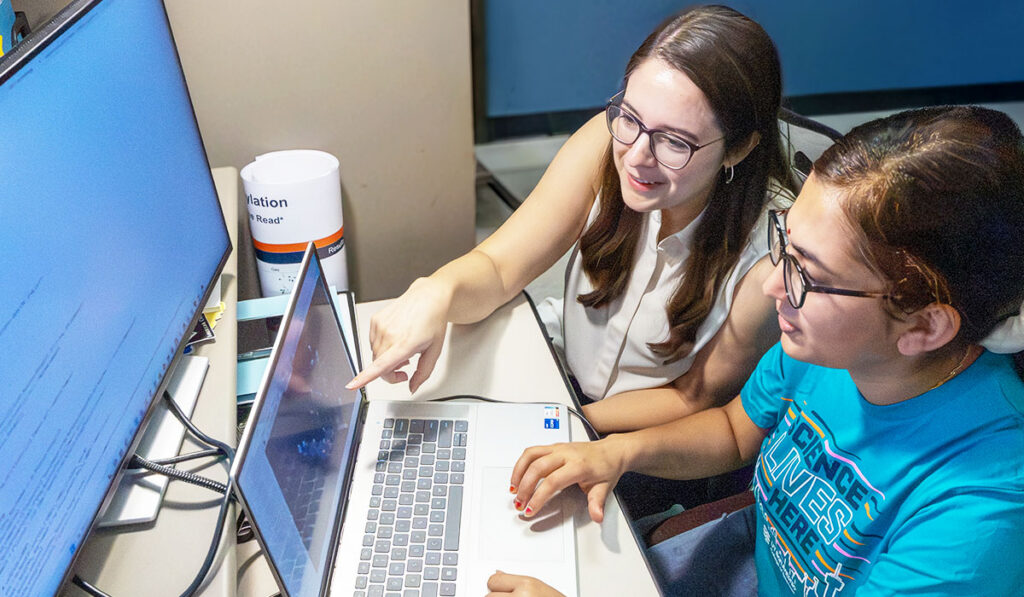
“We’re pushing the boundaries of what Rhodium was designed to do,” said Jonathan Bohmann, Ph.D., a staff scientist at SwRI who worked with computer scientists to develop the Rhodium platform in the early 2010s. Over the last decade, Bohmann and his team have sharpened the technology to screen millions of potential drug candidates based on the protein structure of diseases such as coronavirus, hepatitis and Ebola. This is the first time the Rhodium platform will go beyond drug discovery to identify catalysts.
Both research teams will work to adapt Rhodium to deliver computational data and a list of potentially viable peptide catalysts that researchers at UT San Antonio College of Sciences will then test and validate in their laboratories.
“The advantage of exploring peptides, these tiny pockets of proteins, is that scientists can easily produce and synthesize variations in the laboratory,” said Jacquelyne Read, Ph.D., an assistant professor at UT San Antonio. “Peptides can exist in numerous combinations and shapes, but we’re very interested in solving for the unique challenges that come with that flexibility.”
Read hopes the process will not only accelerate discovery but improve efficiency and sustainability in the drug development field.
This project was funded fully or in-part by The University of Texas at San Antonio, Office of Research and Innovation and Southwest Research Institute. Founded in 2010, the Connecting through Research Partnerships (Connect) program fosters collaborative research between SwRI and UT San Antonio.
To learn more, visit Structure-Based Drug Design or contact Camaron Brooks, +1 210 522 2357, Communications Department, Southwest Research Institute, 6220 Culebra Road, San Antonio, TX 78238-5166.