


JUNE 1, 2022 — UTSA community members and San Antonio residents now have the opportunity to immerse themselves in either Spanish, Korean or Japanese language and culture through the new UTSA San Antonio Language Academy (SALA).
A collaborative project between the Global Initiatives office and the College of Liberal and Fine Arts (COLFA) Department of Modern Languages and Literatures, SALA is a language immersion experience that includes courses, cultural activities, international cuisine and local faculty-led excursions around San Antonio.
The SALA experience is designed for heritage speakers and intermediate- to advanced-level speakers who want to become fluent in one of the three languages, pursue a study abroad opportunity, build their resume or have a unique cultural experience.
The first program, which runs through June 3, boasted 55 participants across the Spanish, Korean and Japanese immersions.
The second SALA summer program, which will be offered in Spanish only, runs from 9 a.m. to 3:30 p.m. each weekday from June 13 to July 1. Visit the SALA website to register.
“We are so excited to launch this new program that provides our community members with global perspectives.”
UTSA San Antonio Language Academy
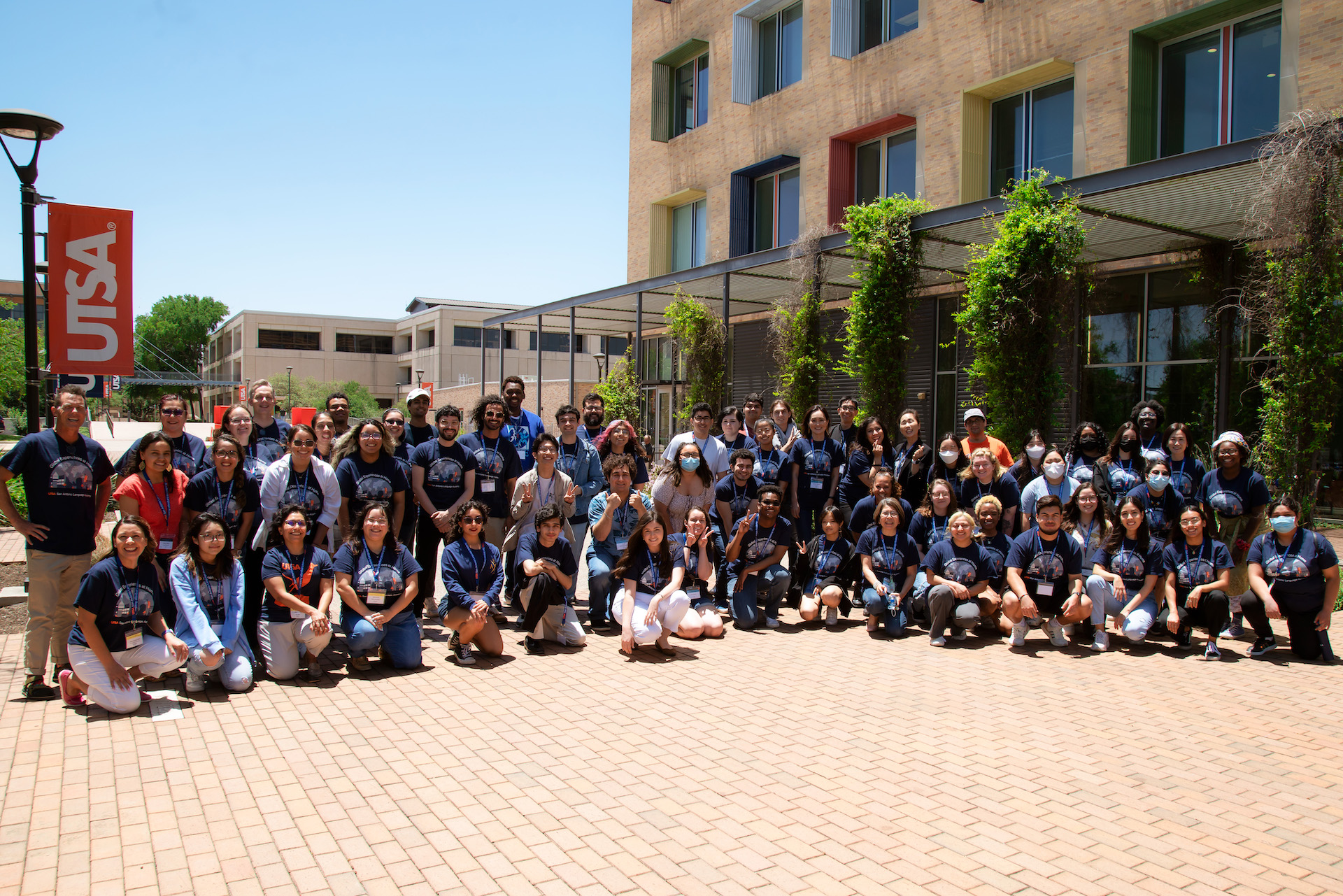
SALA 2022 Summer I
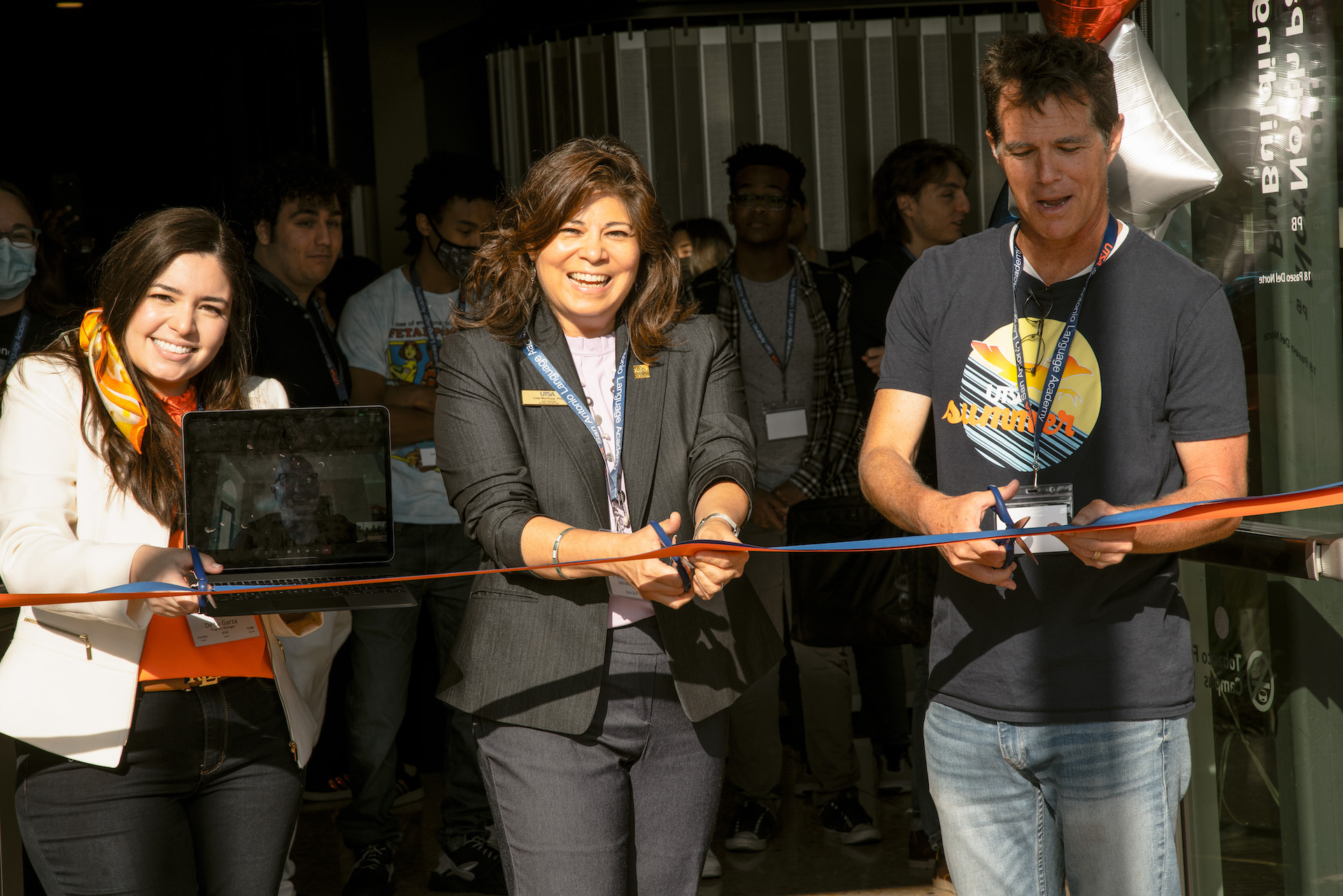
UTSA held a ribbon cutting ceremony to inaugurate the launch of the SALA program. Pictured left to right: SALA program manager Carelli de la Garza, Sean Kelly (via laptop), Lisa Montoya, Nathan Richardson.
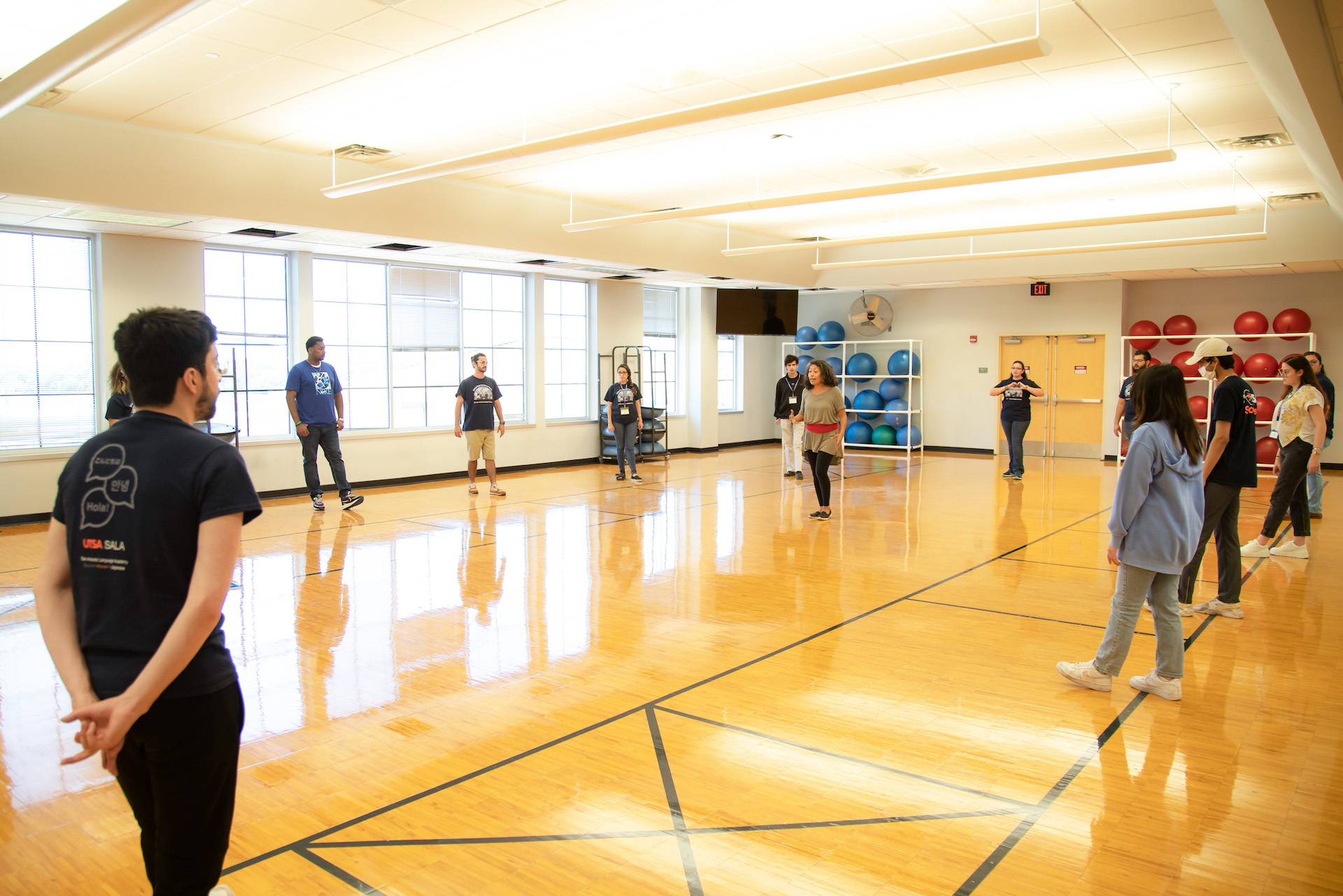
SALA Spanish immersion students learn cultural contemporary and cumbia dance from instructor Rosie Torres.
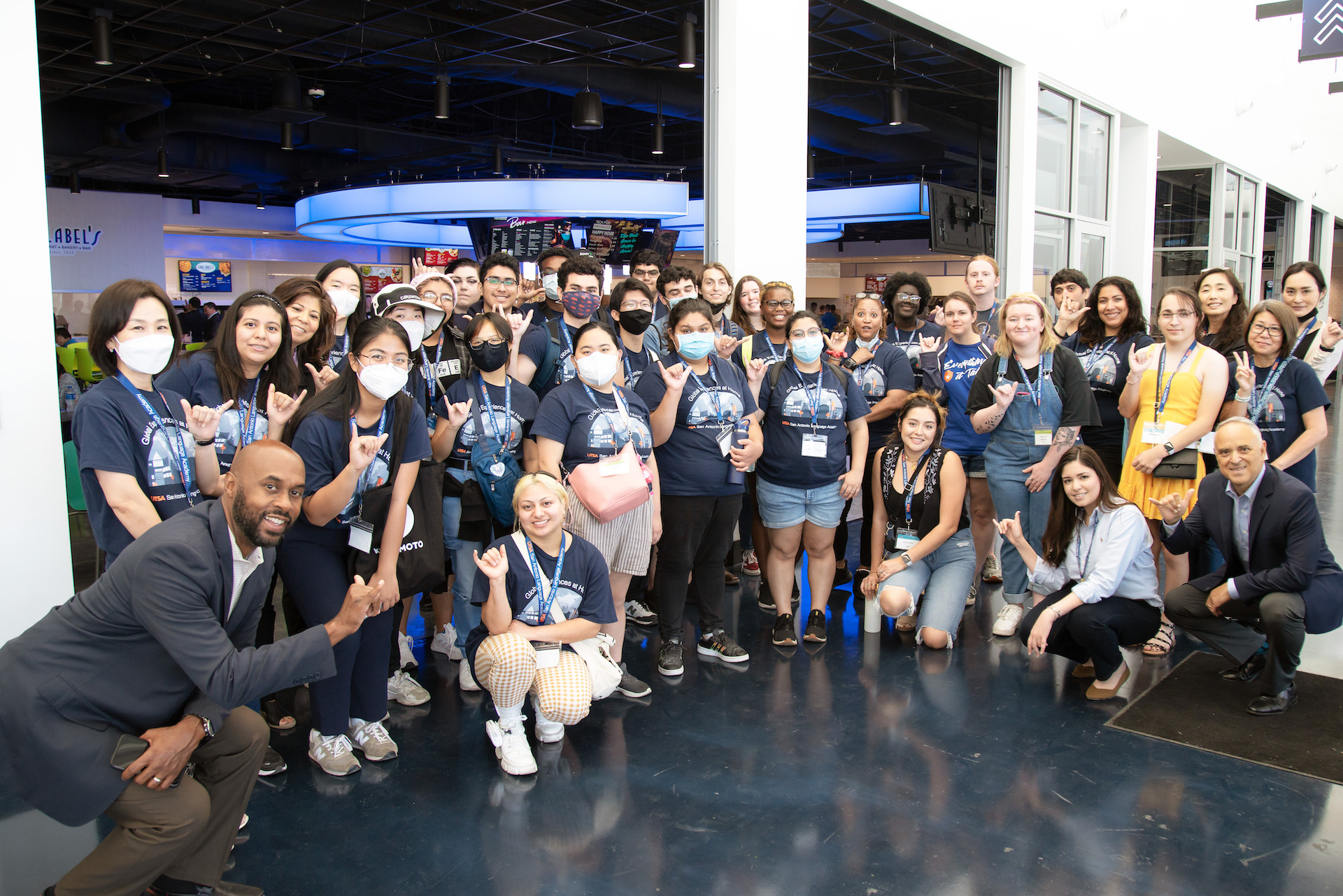
SALA Japanese and Korean immersion students visit Port San Antonio to visit international companies based there..
The program is funded in part by a $500,000 grant from the National Endowment for the Humanities American Rescue Plan to support the economic recovery of cultural and educational institutions.
Lisa Montoya, UTSA vice provost for global initiatives and senior international officer, Nathan Richardson, associate dean of COLFA and chair of the modern languages and literatures department and Sean Kelly, dean of the UTSA Honors College, serve as co-principal investigators of the program.
“We are so excited to launch this new program that provides our community members with global perspectives while helping them achieve their fundamental goal of improving a language,” said Montoya. “The language faculty and activity coordinators provide a fun and engaging international experience right here in San Antonio.”
Language instruction classes take place each morning at the North Paseo Building at the UTSA Main Campus. Afternoon programs include cultural activities ranging from cooking, to music and dance, film, virtual tours of major cities and cultural destinations, games and cultural traditions.
On Thursdays, the groups take field trips across the city to experience San Antonio through a global lens. Excursions include special presentations by the city of San Antonio’s Office of Global Engagement at the Gwanju Pavilion at Denman Estate Park, Kumamoto En at the San Antonio Botanical Garden and Plaza de las Islas Canarias in downtown’s Main Plaza.
Students also have the opportunity to learn about Japanese sumi-e ink painting at the Institute of Texan Cultures, shop at a Korean and Japanese Market, learn about international innovation at Port San Antonio, tour the San Antonio Missions National Historic Park, visit the Mexican Cultural Institute and the Korean American Cultural Center of San Antonio.
UTSA student Daniel Rodriguez, a junior majoring in modern languages, is part of SALA’s Japanese immersion experience. Already fluent in English, Spanish, French and Portuguese, Rodriguez was drawn to the program’s informal, immersive structure.
He is amazed by how much his Japanese improved as a result of the three-week course.
“At first, I was nervous about making mistakes but very quickly realized that everyone is here to learn and have a good time and support one another,” he said. “I have been shocked by my own ability and I’ve gained so much confidence.”
At age 22, Rodriguez is well on his way toward achieving his goal to be fluent in eight languages and to ultimately run his own language interpretation/translation business.
“I’ve never met anyone who has regretted learning a new language,” he said. “It’s such an enriching human experience.”


