


OF DISTINCTION
AUGUST 13, 2020 — Advances in technology change by the day. And UTSA continually evolves with it. Nearly a decade ago the university demonstrated that it’s a pioneering research institution when it opened the Advanced Visualization Laboratory.
Known as VizLab, the laboratory is a technology-laden facility that allows researchers across the sciences, engineering and the arts to translate large amounts of data into large-scale images to better understand complex phenomena.
Since opening its doors in the Multidisciplinary Studies Building on Main Campus in 2011 the VizLab has transformed the traditional classroom experience by allowing students from all disciplines to experiment with virtual-reality devices into an easily comprehensible manner.
“These devices have allowed students to virtually visit locations around the world and immerse themselves within these ‘virtual’ locations, so they can experience what it’s like to be ‘there,’” said Brent League, director of the research computing support group for University Technology Solutions.
“These devices have allowed students to virtually visit locations around the world.”
Among the multiple functionalities and uses of the laboratory, UTSA art students have been able to view famous works of art on the high-resolution VizWall, a six-foot-tall display of 24 ultra-high-definition monitors with a resolution of nearly 98 million pixels. It’s capable of highlighting the tiniest details in a photograph, allowing students to zoom in and see details such as vivid colors and thickness of paint strokes.
“Many of these pieces of art are located around the world, and most students would not have an opportunity to closely examine these in detail if it weren’t for the VizWall,” League explained.
The lab supports research opportunities with high-performance workstations and high-speed connections to UTSA’s High Performance Computing Cluster, known as Shamu. The workstations at the lab are dramatically more powerful than most personally owned computers or laptops, allowing researchers to complete their simulations at a much faster rate.
Department of Communication professor Seok Kang, for example, has performed focus testing with 2D, panoramic, 3D and VR applications in the VizLab for his study examining how multiple types of media experience can influence audiences’ communication with a celebrity.
“The VizLab accommodated my research needs by providing the right equipment and space,” said Kang. The facility met my research plan, and I was able to accomplish what I expected, thanks to the lab by providing a controlled research environment that is particularly important in experimental research.”
Other uses of the lab include the surgical simulator, a collaboration between the Center for Simulation, Visualization and Real Time Prediction at UTSA and UT Health San Antonio. The simulator puts students in a virtual reality environment to train them on a cardiopulmonary bypass machine (heart-lung machine) during cardiac surgery and other surgeries that require the bypass to manage a patient’s physiological status.
As Seen on VizWall
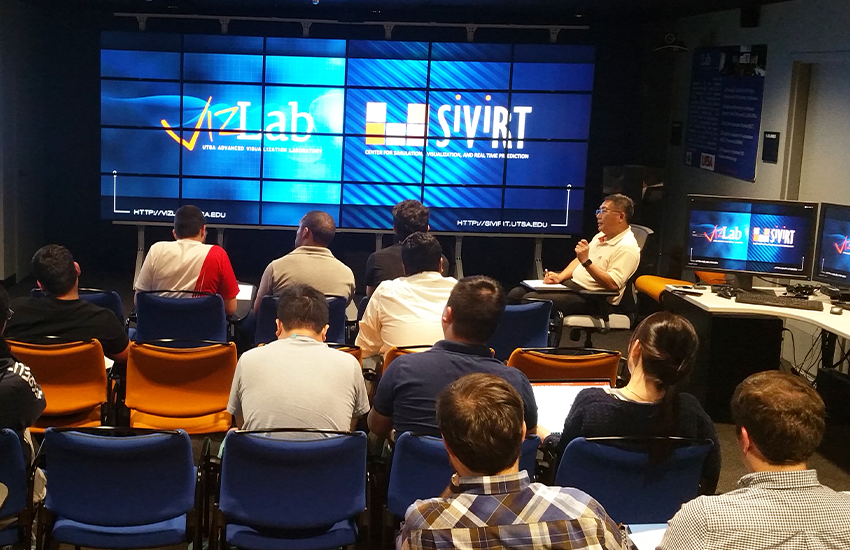
Researchers gather in front of the VizWall in the VizLab.
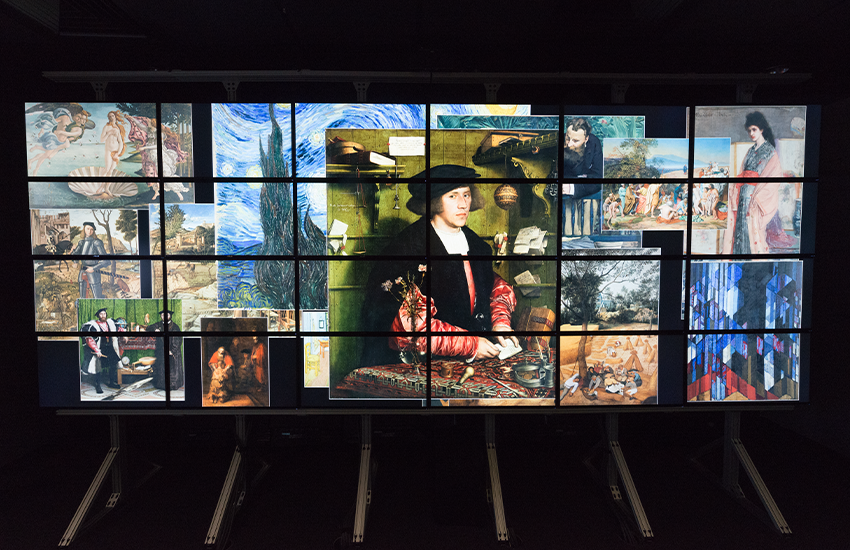
An array of paintings on the VizWall.
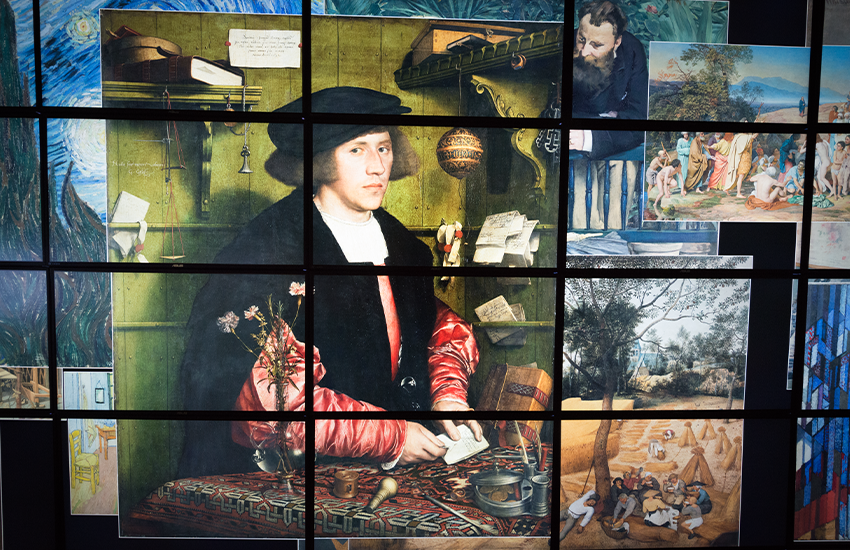
A closer view of the array of paintings on the VizWall.
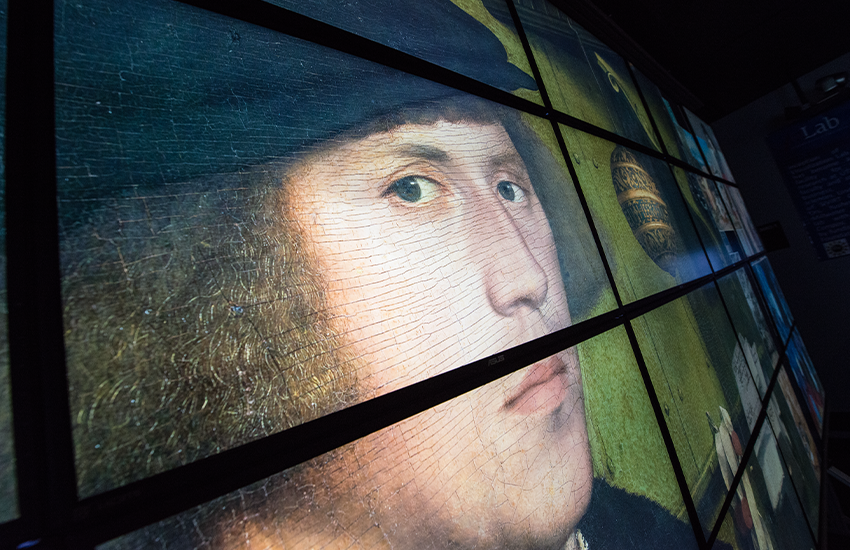
An extremely closeup view of a painting in the array.
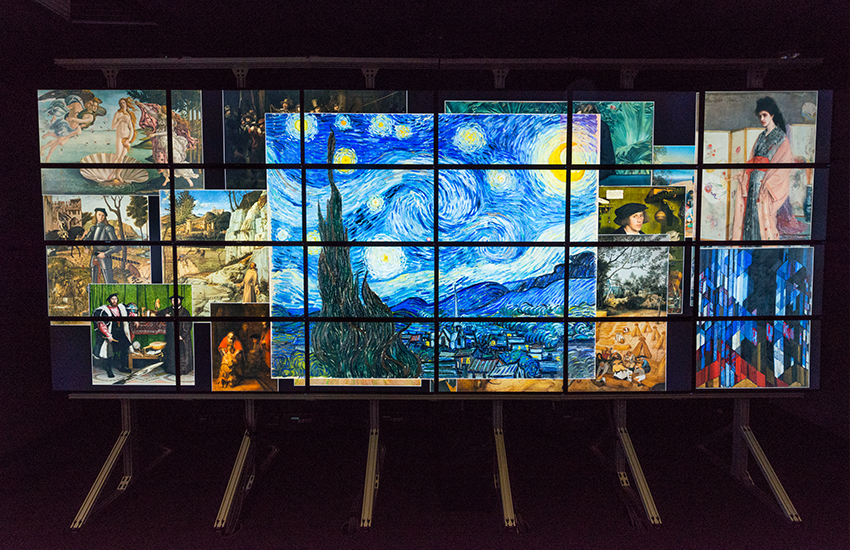
Another array of paintings, including Van Gogh’s The Starry Night.

An extremely closeup view of the rising sun in The Starry Night.
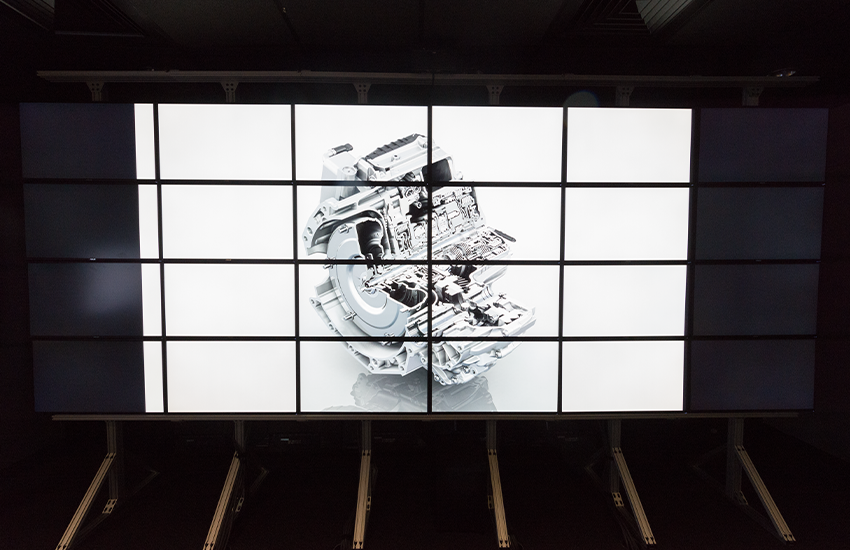
A cross-div of an engine.
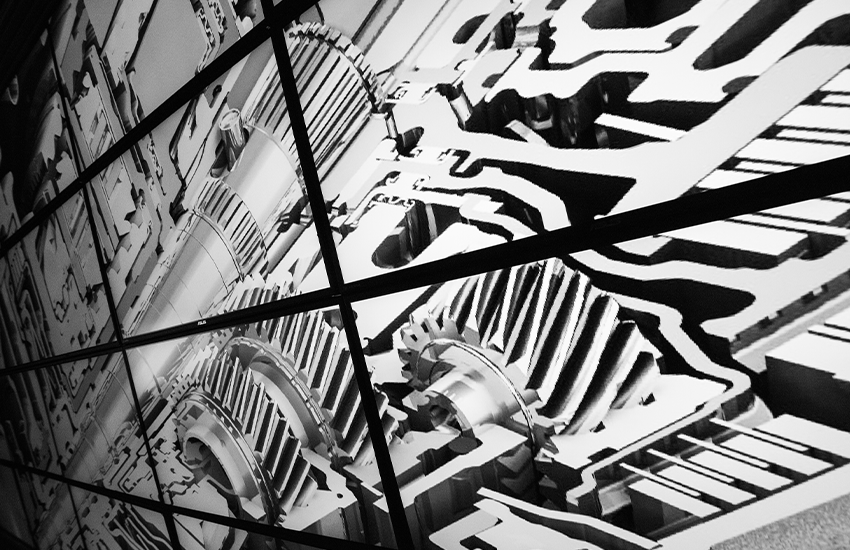
A closeup view of the engine cross-div.
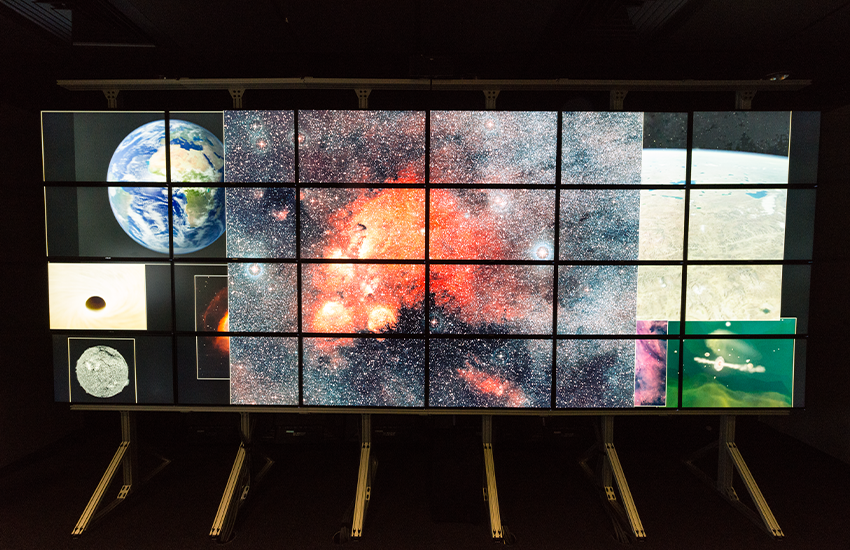
A selection of deep space images.

A closeup of a nebula among the deep space images.

A modeling of ocean currents surrounding North America.
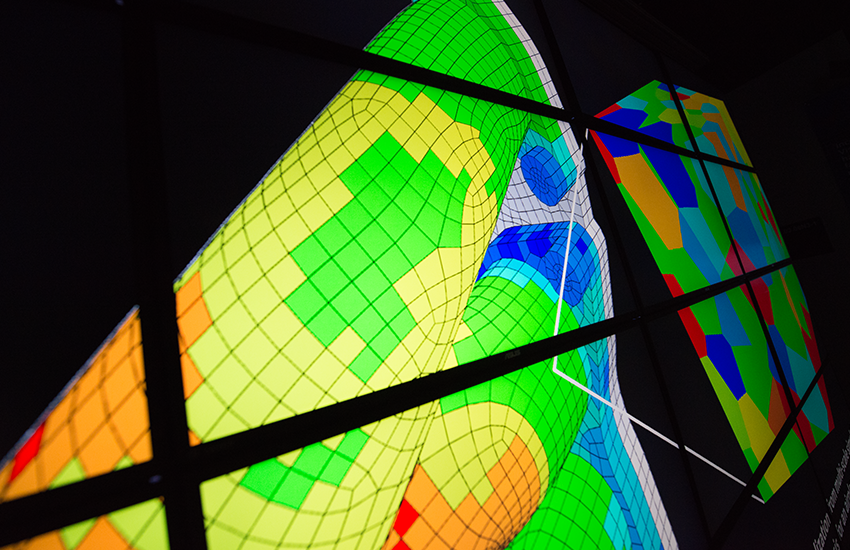
A display of 3D engineering modeling.
Students were using neurologic imaging on the high-end workstations to trace and map neurons that required both large amounts of system and video card memory.
Funded by the National Science Foundation under the Major Research Instrumentation Program, the VizLab has hosted more than 8,300 visitors since 2016, including classroom lectures, student organizations, outreach programs and community organizations.


