

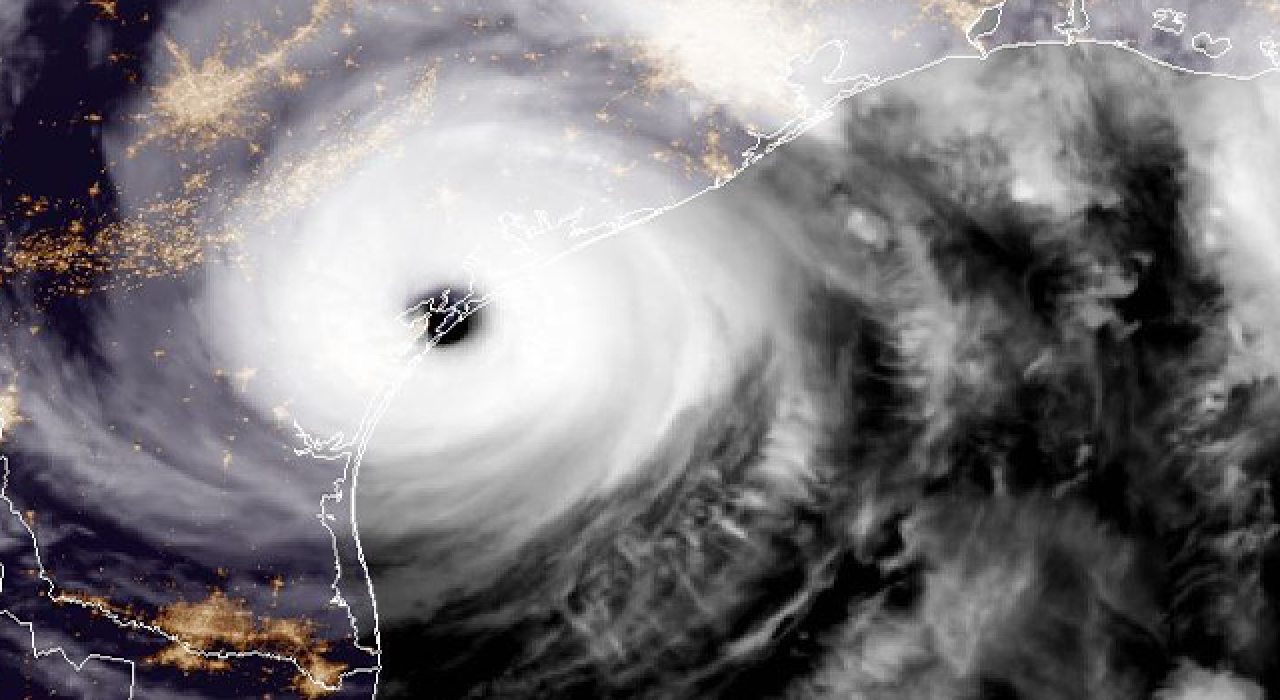
JULY 22, 2020 — With Texas being a prime target for hurricanes, UTSA’s Center for Cultural Sustainability is launching a two-year effort to improve the resilience of historic buildings along the state’s Gulf Coast so they can better survive severe weather events.
The National Weather Service predicts this year’s U.S. hurricane season will include a higher than average number of storms. As experts anticipate increasingly greater challenges due to climate change, coastal communities must brace for impact. But historic districts—which by their very nature can’t relocate—face unique challenges.
To address this problem, an interdisciplinary team of researchers is turning to historic houses of worship. In addition to technical solutions, the work will establish a Sacred Places Heritage Network for Disaster Resilience, providing support to sacred places listed on the National Register of Historic Places and located within the most impacted areas of Hurricane Harvey damage in 2017.
“People are what make a place truly sustainable, and people are asking, ‘What can we do to better prepare?’”
Backed by emergency supplemental funding from the Historic Preservation Fund, administered by the National Park Service, U.S. Department of the Interior and the Texas Historical Commission, the research project will create connections between multiple faith-based organizations and the communities they serve, empowering them to become more resilient to large-scale disruption.
“Anticipating an increase in frequency and intensity of hurricanes, we must ackowledge that people are what make a place truly sustainable, and people are asking, ‘What can we do to better prepare?’” said William Dupont, who is director of the Center for Cultural Sustainability and holds the San Antonio Conservation Society Endowed Professorship in architecture at UTSA. “Historic places of worship are community anchors, locally supported by committed volunteers and holding collective memories, wisdom and lessons of cultural sustainability. Our project will help them attain higher resilience plus disseminate information on sustainability.”
The direct beneficiaries of the project will be historic buildings used by faith-based organizations. Working through these sacred places, the research team will ensure a greater capacity for them to provide essential social services in response to crises.
Candidates for the network include houses of worship that date to the late 19th or early 20th centuries, are listed on the National Register of Historic Places and are ocated in the FEMA-designated most impacted areas of Hurricane Harvey damage.
Teaming with UTSA to identify and recruit eight to 10 congregations whose buildings will serve as case studies is Philadelphia-based nonprofit Partners for Sacred Places, which aided numerous houses of worship in Galveston following Hurricane Ike in 2008.
Additionally, Houston field offices for the National Trust for Historic Preservation and the American Institute of Architects as well as Galveston Historical Foundation and Victoria Preservation Inc. will assist in case-study selection.
Once case-study structures are chosen, UTSA experts in architecture, historic preservation, construction science and engineering will work to evaluate the structures’ vulnerabilities and recommend changes to address those vulnerabilities—increasing the buildings’ resilience and strength without losing historic character. Engineering faculty from Eastern Michigan University will assist UTSA researchers on the project.
A primary project outcome will be the development and dissemination of a “resiliency roadmap,” a toolkit designed for a nontechnical audience to guide disaster management planning and enhance the capacity of historic sacred places to prepare and recover.
UTSA and its partners hope the faith-based network will become a model for similar disaster and resiliency planning efforts across the nation.


