


From exploring organic matter on Mars and Europa to reversing stem cell aging, researchers from the UT San Antonio College of Sciences will have the opportunity to further their work with the help of the Seed Grant Initiative.
Investigators driving three innovative projects were selected to receive up to $50,000 in funding to support their research through August 2027.
The Seed Grant Initiative supports high-impact research proposals that competitively position science faculty for external funding from federal agencies, foundations and industry partners.
“By investing in strategic, high-impact projects now, we are growing the college’s research enterprise and establishing new opportunities for external funding, collaboration and scientific discovery,” said Elizabeth Sooby, PhD, associate dean of research at the College of Sciences.
The winning projects were selected through a competitive review process of 28 proposals.
Investigating biosignatures on Mars and Europa

Kaushik Mitra, PhD, assistant professor of earth and planetary sciences, is leading a project that explores how organic matter and potential biosignatures are altered under conditions like those found on Mars and Jupiter’s moon, Europa.
The research combines planetary geochemistry, analytical chemistry and experimental modeling and will potentially reshape how scientists interpret the absence or preservation of complex organic matter on planetary surfaces.
Mitra’s core research team includes Krishnakumari Pamula, PhD, postdoctoral fellow of earth and planetary sciences, Kelly Miller, PhD, lead scientist at Southwest Research Institute (SwRI®) and Wendell Griffith, PhD, special research associate at the Mass Spectrometry & Proteomics Core at UT San Antonio. The team also relies on analytical expertise of other laboratories including Mark Libardoni, PhD, staff scientist at SwRI, Esteban E. Ureña-Benavides, PhD and associate professor in the biomedical engineering and Syed Muhammad Usama, PhD, assistant professor of chemistry. The research positions UT San Antonio to collaborate with NASA’s Jet Propulsion Laboratory, University of Florida, and with Chris Glein, PhD, principal scientist at SwRI.
“This seed grant funding will allow us to generate critical data needed to better understand how potential biosignatures are preserved or destroyed on planetary surfaces and position us for future collaborations and funding opportunities,” Mitra said.
Reversing stem cell aging

Lacy Barton, PhD, assistant professor of neuroscience, developmental and regenerative Biology, and Brij Singh, PhD, professor and associate dean for research in the Department of Periodontics in the School of Dentistry are investigating how calcium signaling can influence and reverse stem cell aging to help treat chronic diseases.
This interdisciplinary effort brings together expertise in developmental biology, regenerative medicine and functional screening across multiple stem cell systems spanning UT San Antonio’s academic and health campuses. The research could provide foundational data for future funding opportunities focused on age-related diseases and regenerative therapies.
Barton’s lab investigates how hormones and other factors support or compromise development, with a special focus on stem cell precursors that ensure fertility and the propagation of species.
Developing next-generation nanomaterials
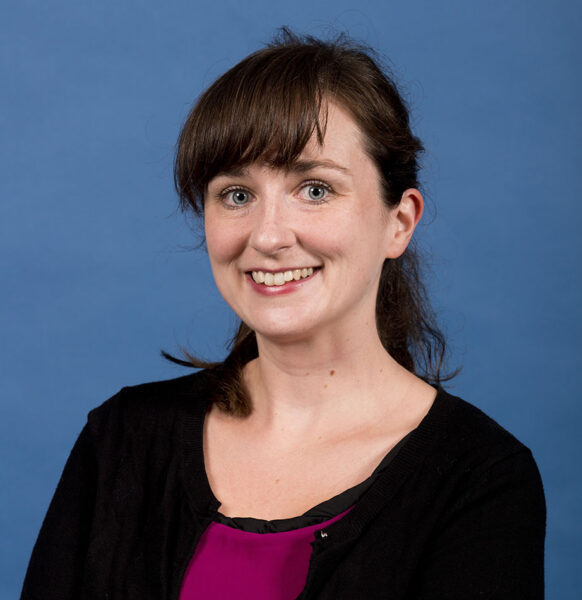
Kathryn Mayer, PhD, associate professor of physics and astronomy, is working on a research project that seeks to advance our understanding of hybrid nanomaterials with potential applications in biosensing, optical control and advanced materials technologies.
The project integrates experimental and computational approaches that align with quantum and nanomaterials initiatives at UT San Antonio. Researchers will use advanced microscopy, computational simulation and magnetic characterization techniques while providing research opportunities for both graduate and undergraduate students.
Generating discovery
The Seed Grant Initiative was open to all College of Sciences faculty. It supports research programs in the college’s core research areas, including biomedical, chemical, physical, environmental, mathematical and computational science as well as STEM education disciplines. Priority consideration was given to research that will leverage the college’s core facilities and will provide student engagement opportunities.
Proposals were evaluated based on their scientific merit, alignment with the college’s core research priorities and potential to attract additional external funding. The projects selected for seed grants represent new or expanded work and are not fully supported by existing internal or external funding.
UT San Antonio is committed to fostering innovation, expanding interdisciplinary collaboration and advancing the university’s discovery enterprise. As the inaugural cohort of researchers begins their work, the program represents another step in the university’s continued investment in research excellence, innovation and discovery.


