What if scientists could detect an invasive parasite before it has a chance to spread?
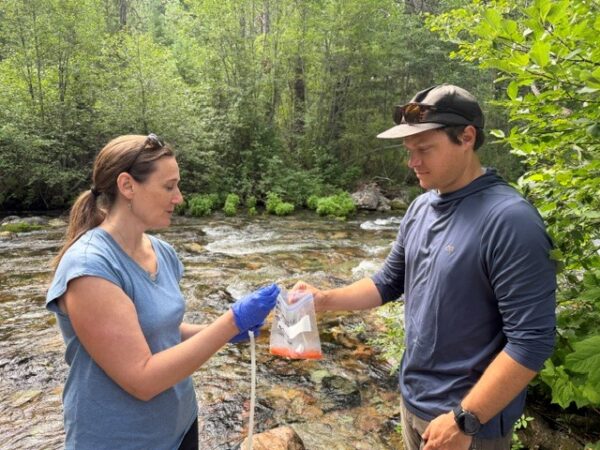
Researchers in the UT San Antonio College of Sciences are exploring that possibility by using environmental DNA (eDNA), a rapidly advancing technology that allows scientists to identify organisms by detecting traces of their genetic material in soil and water.
Mariah Hopkins, PhD, professor of instruction in the Department of Biology, Health and the Environment, hopes eDNA could provide an earlier, more efficient way to detect New World screwworm larvae, which can infest a broad range of warm-blooded animals, making the parasite difficult to contain. The approach could have significant implications for Texas farmers.
“We’re looking at how we can use eDNA to address a problem that has very real implications for Texas agriculture, wildlife, and the economy, while giving our students hands-on experience with the science behind it,” Hopkins said.
New World screwworm can infest a broad range of hosts, including livestock, wildlife and companion animals, making the pest difficult to manage once a widespread infestation occurs.
The USDA estimates that a screwworm outbreak could cost Texas cattle producers $732 million per year and the Texas economy as much as $1.8 billion. As reported by the Texas Tribune that risk became more immediate this June, when the parasite was confirmed in Texas for the first time since its eradication in the 1960s.
If Hopkins’ eDNA research proves successful, it could give ranchers and wildlife managers a new method to identify New World screwworm before it takes hold, potentially limiting future outbreaks in Texas and beyond.
“Early detection is one of the most powerful tools we have for protecting agriculture and natural ecosystems,” Hopkins said.
Hopkins’ interest in the technology builds on research already happening through her department’s Course-Based Undergraduate Research Experiences (CUREs) program, which gives more than 1,000 students each year the opportunity to conduct original research as part of their coursework.
Through CUREs, about 140 students take part in a year-long Biology Research Initiative. Of those, 20 are enrolled in a section that uses eDNA techniques to monitor local waterways for wildlife pathogens, zoonotic pathogens and other microorganisms that can affect wildlife and human health.
CURE’s recent projects have focused on pathogens including chytrid fungus and ranavirus, which have been linked to mass mortality events and population declines in amphibians, as well as bacteria associated with diseases such as leptospirosis and salmonellosis.
USDA E. Kika de la Garza Science Fellowship
Applying eDNA to screwworm research emerged from the partnerships Hopkins formed after receiving the USDA E. Kika de la Garza Science Fellowship, a highly competitive national program that selects fewer than 10 Science Fellows each year.
The fellowship strengthens partnerships and opens career pathways between Hispanic Serving Institutions and the USDA, providing students with opportunities to build connections with federal agencies and scientists. Additionally, students gain access to professional experiences that prepare them for careers in fields ranging from nutrition and public health to agriculture and natural resource management.
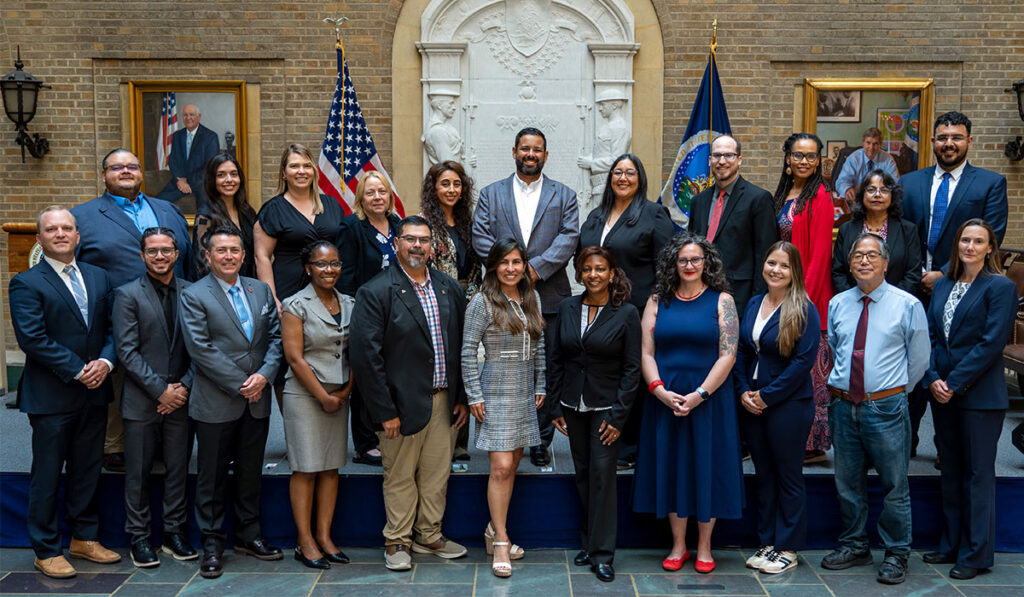
As part of the fellowship, Hopkins spent a week in July in Washington, D.C., where she met with USDA leaders from agencies including the Food and Nutrition Service, the Animal and Plant Health Inspection Service and the Foreign Agricultural Service.
She then traveled to the National Genomics Center for Wildlife and Fish Conservation, operated by the U.S. Forest Service, an agency of the USDA, in Missoula, Mont. The experience allowed Hopkins to learn more about the center’s sampling and analysis techniques, meet with USFS scientists and visit research sites while identifying potential areas for collaboration.
Training the next generation of scientists
Hopkins’ project will allow more CURE students to receive hands-on training in eDNA techniques used for disease surveillance, biodiversity monitoring and environmental management while contributing to research focused on developing an early detection method for New World screwworm.
“Our students will benefit through enhanced curricula, increased awareness of USDA careers and internships, and new research experiences,” Hopkins said. “The project provides students with the opportunity to contribute to solving a challenge of significant importance to Texas and the nation and to do so as part of their degree program.”
Hopkins added, “By combining cutting-edge genomics with undergraduate research, we’re giving students the opportunity to help solve problems that matter to communities, producers and public health.”